
Hormones & Women’s Fitness: How the Female Cycle Impacts Training, Recovery, and Performance
Women are not “smaller versions of men” when it comes to fitness. Hormones have a powerful influence on energy levels, strength, recovery, mood, and even injury risk. Yet most training programs fail to account for them. Understanding how female hormones affect the body isn’t about creating limitations. It’s about unlocking smarter training, better recovery, and more consistent progress.
Let’s break it down.
The Major Players: Estrogen, Progesterone, and Testosterone
Female physiology is influenced by many hormones, but three have the greatest impact on training:
1. Estrogen
Estrogen tends to peak around ovulation. Fitness effects include:
Improved strength and power
Higher pain tolerance
Better insulin sensitivity
Enhanced neuromuscular performance
Lower perceived exertion
Estrogen is often described as a “performance enhancer” for women — workouts feel easier and strength gains come faster in this phase.
2. Progesterone
Progesterone rises during the luteal phase (after ovulation). It is associated with:
Higher body temperature
Increased heart rate
Reduced ability to cool down
Greater fatigue
Slower recovery
This hormone can make high-intensity training feel harder, even though effort stays the same.
3. Testosterone
Yes, women have testosterone too, just in smaller amounts. It helps with:
Muscle growth
Strength development
Recovery
Some women experience their highest natural testosterone levels around ovulation, which can create a short window of peak strength potential.
The Menstrual Cycle: How Each Phase Affects Fitness
Understanding cycle phases empowers women to train with their bodies instead of against them.
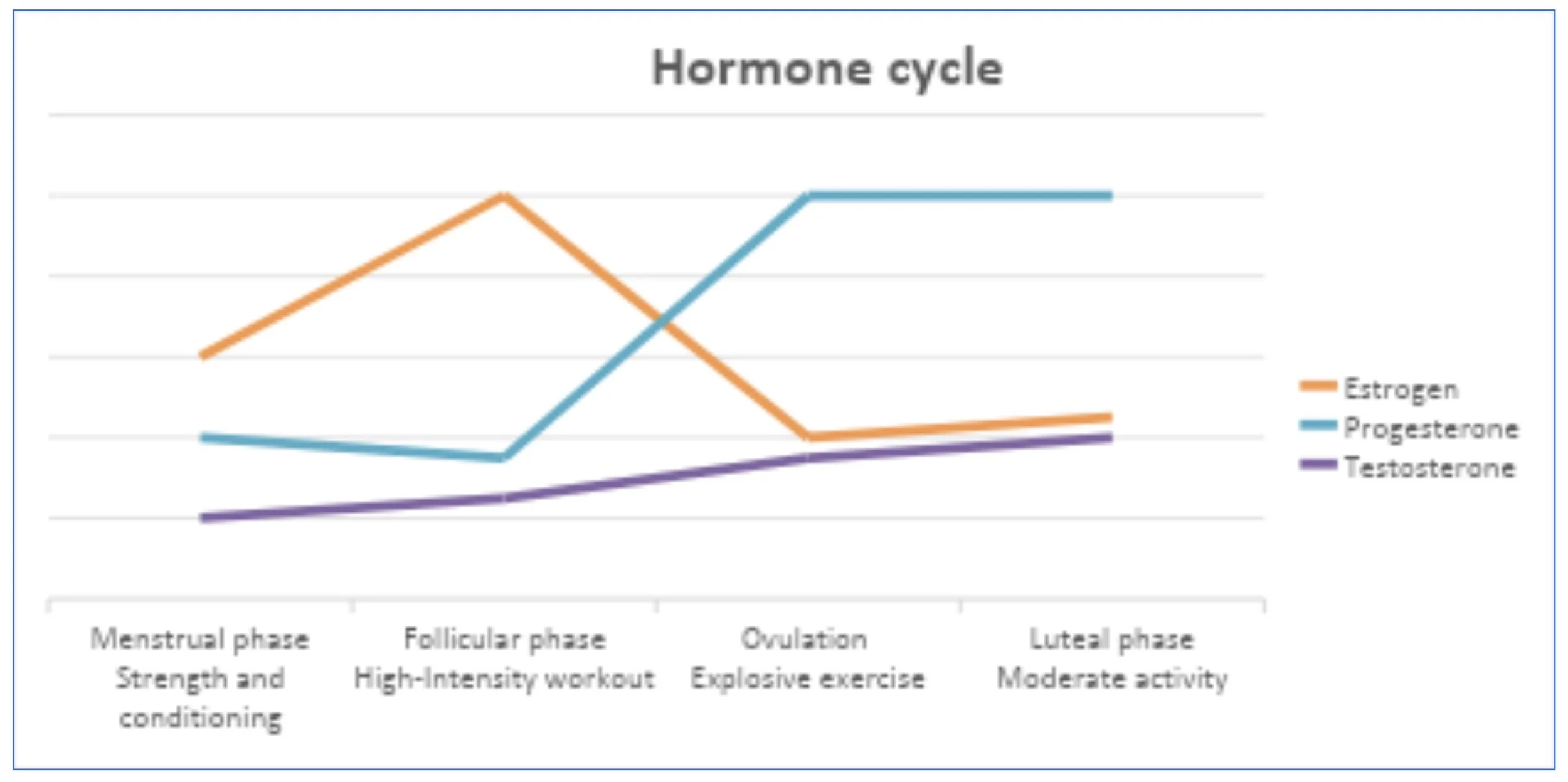
1. Menstrual Phase (Day 1–5). Estrogen and progesterone levels are low.
How this affects training:
Fatigue can be higher for some
Strength is often stable or even slightly improved
Once bleeding begins, inflammation decreases
Best training focus:
Strength training
Low-impact conditioning
Mobility and technique work
Many women actually feel surprisingly strong once the first 1–2 days pass. HIIT may not be the best fit for this phase, but that doesn’t mean you’re not allowed to do it. It just means that if you feel slower or less powerful than usual, you can give yourself some grace instead of getting frustrated.
2. Follicular Phase (Day 6–14). Estrogen rises while progesterone stays low. This is often the best performance window of the entire cycle.
Benefits include:
Higher energy
Faster recovery
Better strength and power output
Improved tolerance for high-intensity work
Best training focus:
Heavy lifting
Sprinting and interval work
High-intensity metcons
Volume-based strength work
Progress tends to come more quickly during this phase.
3. Ovulation (Around Day 14). Estrogen peaks, testosterone rises briefly. Performance is often at its highest, but injury risk may increase.
Why? Elevated estrogen affects ligament laxity, potentially increasing risk for ACL or soft-tissue injuries.
Best training focus:
Strength and power sessions
Explosive work
Skill training
Avoid unnecessary “max testing” if joints feel unstable
Every woman is different so listening to your body is key here.
4. Luteal Phase (Day 15–28). Progesterone rises. Body temperature increases. Training can feel harder, even if nothing else has changed.
You may notice:
Higher heart rate during workouts
Lower tolerance for heat
More cravings
Greater fatigue
Slower recovery
Drop in explosive power
Best training focus:
Steady-state cardio
Moderate-intensity strength work
Technique refinement
Lower volume if fatigue is high
During the final days (late luteal phase), PMS symptoms may impact performance. It’s normal to feel slower or more fatigued.
How Hormones Affect Recovery
Hormones influence not just performance, but how quickly the body heals and adapts.
Estrogen supports recovery by:
Reducing muscle damage
Improving collagen synthesis
Enhancing glucose uptake
Progesterone can slow recovery by:
Increasing inflammation
Raising core temperature
Elevating perceived exertion
This is why some women bounce back quickly in the follicular phase but need more rest in the luteal phase.
Practical Training Tips for Women
1. Train hard when your body is primed for it.
Follicular phase = strength, power, HIIT, max effort.
2. Shift to moderate intensity when progesterone rises.
Luteal phase = steady cardio, technique work, maintenance strength. Not every workout has to be an all-out effort. Some days, a steady, relaxed pace is exactly what your body needs. What counts most is that you keep showing up.
3. Prioritize recovery late in the cycle.
Sleep, hydration, and nutrition matter even more in PMS-heavy days.
4. Track your cycle.
Patterns will emerge: energy, cravings, strength, motivation.
5. Fuel properly.
Carbs matter more in the luteal phase. Electrolytes help regulate increased body temperature.
6. Avoid comparing “bad luteal days” to “peak ovulation days.”
Your hormones change, your performance will fluctuate too. This isn’t inconsistency. It’s biology.
Why This Knowledge Matters
When women understand their hormonal patterns, they can:
Train smarter
Reduce frustration
Maximize progress
Avoid unnecessary burnout
Improve injury prevention
Support long-term health
Women’s cycles are not obstacles, they’re powerful biological rhythms that, when understood, make training more effective and more empowering.